
Table of Contents
ToggleIf you’ve spent any time in Overwatch communities, you’ve probably stumbled across the Overwatch angel meme, a blend of humor, fandom, and in-game culture that’s become an integral part of how players talk about the game. What started as niche jokes among dedicated fans has exploded into a phenomenon that spans Reddit, TikTok, Twitter, and YouTube. The meme encapsulates something genuine about Overwatch’s community: a shared language that mixes affection for beloved characters, frustration with balance patches, and pure comedic chaos. Whether you’re a veteran player or newer to the franchise, understanding this meme gives you insight into how gaming communities build and share culture. This guide breaks down where it came from, how it evolved, and why it’s stuck around.
Key Takeaways
- The Overwatch angel meme is a collection of jokes and edits centered around Mercy that blends affection, frustration with balance patches, and absurdist humor into a shared language within gaming communities.
- The meme originated from the tension between Mercy’s iconic design, power in competitive play, and controversial balance changes, which sparked both reverence and criticism among players starting around 2017-2018.
- Reddit’s r/Overwatch and r/OverwatchCirclejerk were early epicenters where the meme evolved, later spreading to Twitter, TikTok, and YouTube through memes, gameplay clips, and fan art that made it accessible across platforms.
- The Overwatch angel meme resonates with gamers because it captures universal experiences like support player struggles, character attachment, and the complexity of game balance that can’t be reduced to a single truth.
- Blizzard Entertainment officially recognized the meme, acknowledging it in patch notes and social media, which legitimized it as part of the game’s culture and created a feedback loop that influenced balance discussions.
- The meme reflects how modern gaming communities have evolved from passive consumption to active content creation, using humor as both a coping mechanism for frustration and a powerful bonding tool across diverse platforms.
What Is The Overwatch Angel Meme?
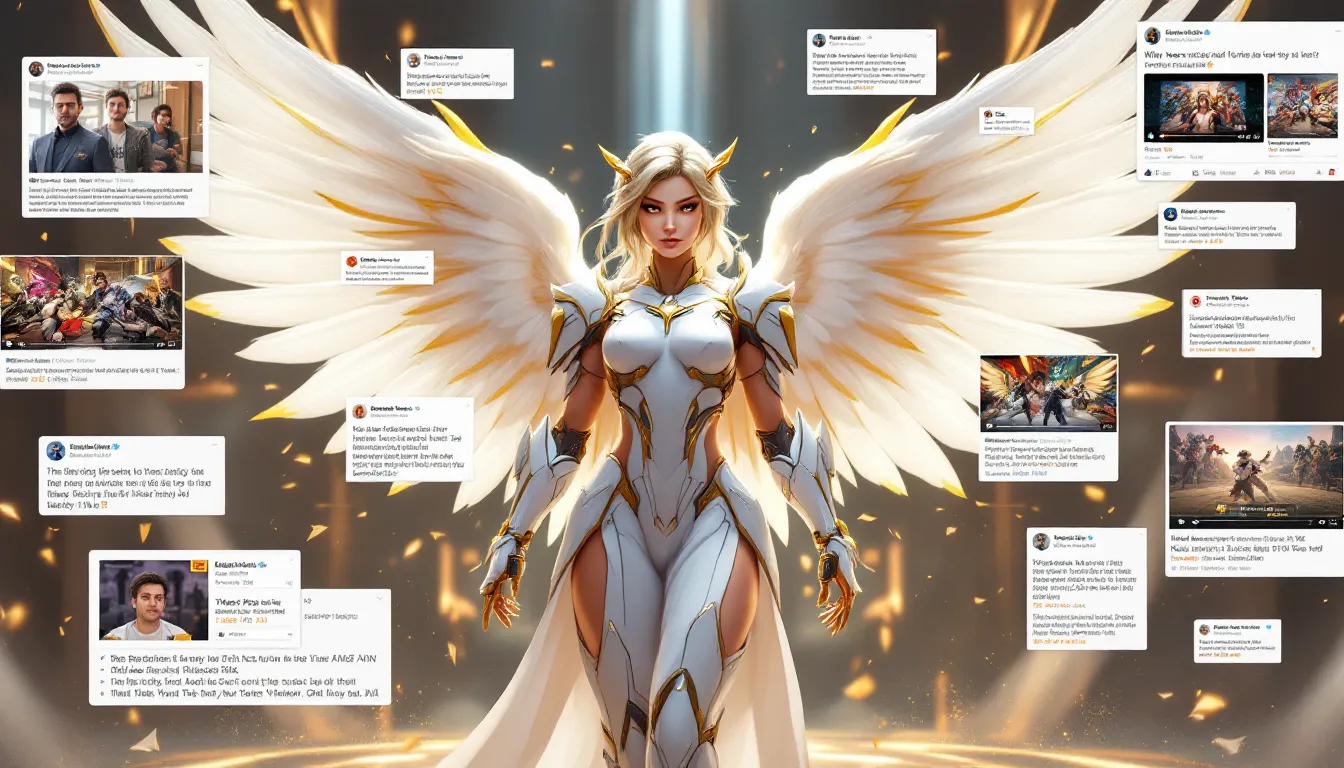
The Overwatch angel meme is a collection of jokes, edits, and references centered around Mercy, Overwatch’s primary healer and the character with the iconic wings. The meme plays on several angles: Mercy’s angelic appearance and design, her role as a support hero, her controversial status in the competitive community, and the intense fan discussions (both positive and negative) that surround her. At its core, the meme pokes fun at the reverence some players have for Mercy while simultaneously roasting her as either overpowered or underpowered depending on the patch. The humor often manifests as photoshopped images, gameplay clips with exaggerated commentary, and ironic praise that blurs the line between genuine appreciation and satire. What makes this meme resilient is its flexibility, it works whether you’re celebrating Mercy’s gameplay, mocking her balance changes, or just enjoying absurdist takes on her character. The mercy overwatch meme also branches into related humor around angels, healing mechanics, and the broader dynamics of support players in competitive gaming.
Origins: How The Meme Started
The Mercy Character Connection
Mercy was always destined to become iconic. She launched with Overwatch in 2016 as one of the original heroes, and her design, a Swiss combat medic with white and gold armor and massive mechanical wings, made her instantly recognizable. Her aesthetic positioned her as angelic, benevolent, and heroic, but also gave artists, meme creators, and the community endless material to work with. Beyond visuals, Mercy’s kit made her central to team dynamics. She could heal teammates from range, boost their damage output with her damage amplification beam, and resurrect fallen teammates with her ultimate ability. This power made her simultaneously beloved and controversial, powerful enough that she shaped game outcomes, but also fragile enough that she’d sometimes feel helpless without proper team protection.
The character’s popularity spawned two distinct communities: genuine fans who appreciated her gameplay and design, and a vocal contingent of players who blamed Mercy’s balance for their losses or felt her power was excessive. This friction between reverence and criticism became the perfect breeding ground for humor.
Early Community Moments That Sparked The Trend
The meme didn’t crystallize from a single moment but rather accumulated through several incidents and balance changes. Early conversations centered on Mercy mains (players who primarily played Mercy) and whether they “deserved” to climb the competitive ladder. This sparked playful debates about mechanical skill vs. impact, which naturally led to ironic posts calling Mercy both a “game-carrying goddess” and “the most useless support.” Around 2017-2018, during patches where Mercy received significant buffs, particularly the controversial rework that gave her invulnerability during resurrection, the community exploded with both sincere complaints and absurdist humor praising or mocking her power level. Streaming moments helped too: high-level Mercy players making incredible plays were celebrated, while clips of Mercy players making baffling mistakes were ridiculed. The relatability factor was key, nearly every Overwatch player had experienced either hard-carrying a Mercy or watching their Mercy feed the enemy team. This shared experience gave the meme legs and made it instantly recognizable across the community.
The Meme’s Evolution Across Platforms
Reddit and Discord: Where It Took Off
Reddit’s r/Overwatch and r/OverwatchCirclejerk became early epicenters for angel meme content. The subreddit ecosystem allowed players to post gameplay clips, fan art, and memes with commentary, format perfectly suited for the meme’s evolution. r/OverwatchCirclejerk especially became a sandbox for ironic and exaggerated versions of the meme, where “Mercy bad” or “Mercy is the most balanced hero” posts became self-aware jokes. Discord servers dedicated to Overwatch added another layer: faster-paced, real-time conversations where memes could be refined and remixed instantly. Server members would react with custom emojis, tag each other with inside jokes, and create variations within hours. This rapid iteration was crucial, it meant the meme stayed fresh and adapted to new patches and current events. The Discord environment particularly fostered the mercy overwatch meme’s connection to broader gaming culture because server conversations often jumped between topics: balance discussions, gameplay mechanics, character design, and absurdist humor all blended together.
Spread to Twitter, TikTok, and YouTube
Twitter gave the meme mainstream visibility and speed. Tweets about Mercy, ranging from genuine balance complaints to purely comedic takes, would accumulate thousands of likes and retweets, introducing the meme to casual gamers and non-players alike. The platform’s character limit forced creativity: people had to distill the joke into punchy one-liners or add a simple image. This accessibility made the meme portable: someone could screenshot a tweet and share it across other platforms instantly. TikTok accelerated the visual dimension. Short-form video creators made Mercy gameplay compilations set to music, lip-sync videos where they pretended to be Mercy, and edited clips exaggerating her abilities or perceived flaws. The algorithm boosted engaging Overwatch content, exposing the meme to viewers who’d never played the game. YouTube content creators, both streamers and editors, embedded the meme into their videos. A streamer might play Mercy, have a ridiculous moment, and their editor would add sound effects, text overlays, and reference the meme in the thumbnail. This gave the meme credibility and reach: when established creators participated, it signaled that the meme was worth paying attention to. The Overwatch Community Spotlight: Unveiling the creative side of fandom shows how these platforms became interconnected ecosystems where the meme could thrive.
Fan Art and Creative Variations
Fan artists took the meme in dozens of directions. Some created detailed, gorgeous artwork celebrating Mercy as a hero, while others made intentionally crude or funny sketches. Crossover art paired Mercy with other game characters, anime heroes, or meme formats from completely different communities. The internet also produced variations specific to subcultures: anime fans created their own versions, speedrunners made gameplay-focused edits, and esports fans connected the meme to competitive drama. What tied all these versions together was the willingness to play with Mercy’s image, to push her design, personality, and reputation in new and unexpected directions. This creative freedom meant the meme could adapt faster than the game itself changed, staying relevant even when Mercy’s actual balance shifted.
Key Formats and Iconic Moments
Memorable Gameplay Clips and Reactions
Certain gameplay moments became instant meme templates. A clip of a Mercy player attempting to resurrect a teammate but getting instantly eliminated spawned variations on the theme of “trying your best and failing anyway.” High-level competitive matches where Mercy was played at the professional level generated both serious analysis and comedic mockery depending on whether she won or lost the game. The unpredictability was the point, Mercy could be the difference between victory and defeat, making every game a potential meme moment. Reaction videos added another layer: streamers watching Mercy highlights and shouting “What?.” or “How is that even possible?” became a format of its own. These reactions felt genuine even when slightly exaggerated for entertainment, because the moments being reacted to were legitimately surprising. The overwatch angel meme exists partly because Mercy as a character and gameplay element invites extreme reactions, she’s either working perfectly or catastrophically, leaving little middle ground.
Photoshops, Edits, and Remixes
Photoshopped images became the visual backbone of the meme. Simple edits placed Mercy’s face or wings onto other images, historical figures, movie scenes, meme formats, to create absurdist humor. More elaborate edits involved gaming the Overwatch client itself, creating fake patch notes or stats claiming Mercy could do ridiculous things. Video edits mixed gameplay with music and text overlays to exaggerate certain moments. A clip of a Mercy getting killed might be edited with slow-motion, dramatic music, and subtitles making it seem like a cinematic tragedy. These edits required skills in image editing, video production, or just clever use of free tools, making the meme accessible to creators at all skill levels. The flexibility of the format meant someone could spend hours on a detailed edit or slap together a quick meme in minutes and have both resonate with audiences. This democratization of meme creation kept the meme alive, anyone could contribute, not just established content creators.
Community Reception and Impact
How Streamers and Content Creators Embraced It
Streamers were instrumental in normalizing and amplifying the meme. Channels dedicated to Overwatch, whether focused on gameplay guides, competitive analysis, or pure entertainment, would reference the meme in thumbnails, overlays, and commentary. Streamers who played Mercy adopted a self-aware persona where they’d lean into meme expectations: joking about their own Mercy plays, building narratives around her strengths and weaknesses, and inviting chat to contribute meme ideas. This created a feedback loop: streamers got engagement from meme references, audiences felt included because they understood the in-jokes, and the meme remained visible and relevant. Content creators like editors and clip makers built entire channels around Overwatch memes, compiling funny moments and community references into videos that regularly hit millions of views. Professional esports commentators, while more reserved, couldn’t completely avoid the meme, they’d occasionally reference it when discussing balance patches or professional Mercy plays, giving it legitimacy across different segments of the community. According to coverage on NME Gaming, gaming culture increasingly relies on memes as a shared language that builds community identity and engagement, and the Mercy meme exemplifies this perfectly.
Official Recognition from Blizzard Entertainment
Blizzard didn’t ignore the meme. The developers and community team acknowledged it in various ways: patch notes occasionally contained subtle nods to Mercy balance discussions, developers mentioned the meme in interviews, and the official Overwatch social media accounts engaged with fan content. This official recognition gave the meme a sense of legitimacy and permanence. It meant that Blizzard saw the meme as part of the game’s culture, not something to shut down but something reflecting genuine community engagement. When game developers acknowledge memes, it signals that the community’s voice matters and that the line between “official” and “fan-created” content is permeable. The meme also influenced how Blizzard approached Mercy balance going forward. While the company makes balance decisions based on data and game health, the meme meant those decisions were instantly scrutinized through a comedic lens. A Mercy buff would trigger meme flood: a nerf would generate ironic mourning posts. This feedback mechanism, while sometimes chaotic, helped keep the conversation visible and relevant to the broader gaming audience.
Why The Meme Resonates With Gamers
The Overwatch angel meme works because it taps into several universal gaming experiences. First, it speaks to the tension between game balance and player perception, a conflict every competitive game navigates. Mercy is powerful, fragile, essential, and sometimes frustrating, all at once. This complexity makes her a perfect meme subject because she can’t be reduced to a single truth. She’s simultaneously the hero and the problem, depending on context and patch notes.
Second, the meme leverages character attachment. Mercy has a massive fanbase that genuinely loves her design, story, and gameplay. This affection creates fertile ground for ironic humor, poking fun at what you love is more fun than poking fun at something you’re indifferent to. The meme also thrives on in-group knowledge. Understanding it requires some familiarity with Overwatch, making it a badge of membership in the gaming community. Casual players might not get the nuances, but hardcore players can recognize it instantly and feel validated that their inside knowledge is being acknowledged and shared.
Third, the meme speaks to support player experiences. Support heroes are often underappreciated in games, they don’t get the glory of kills or the visibility of damage stats. The Mercy meme celebrates and mocks support players simultaneously, creating space for them to feel both heroic and helpless, which mirrors their actual in-game experience. A Mercy player hard-carrying a team of struggling DPS players sees themselves in the meme. A Mercy player abandoned by their team sees themselves in it too. According to reporting from Polygon, memes about game balance and character dynamics have become a primary way gaming communities process frustration, celebrate moments, and build identity. The Mercy meme is a perfect case study in how humor becomes a coping mechanism and a bonding tool.
Related Overwatch Memes and Broader Gaming Culture
The Overwatch angel meme doesn’t exist in isolation, it’s part of a broader ecosystem of Overwatch-specific memes and gaming culture at large. Other Overwatch heroes have their own memes: Genji’s “I need healing” became a cliché complaint, Doomfist’s bugs spawned endless jokes, and Widowmaker’s dominance in certain metas created tension-filled humor. But Mercy’s meme stands out for its longevity and cross-platform reach. Other gaming franchises have analogous memes, League of Legends has its support player jokes, Valorant has agent-specific humor, and Fortnite has character-based memes, but they follow similar patterns: leverage character design, exploit balance frustration, and celebrate community inside jokes.
The Mercy meme also connects to broader internet culture. It borrows from long-standing meme templates, participates in discourse around female characters in gaming, and contributes to conversations about art and fan creativity. When fans create fan art of Mercy, they’re extending the meme into territory that blurs entertainment, appreciation, and satire, showing how far the community takes its affection and humor around the character. The meme also reflects how gaming communities have matured: instead of just discussing patch notes in forum threads, players now remix culture, create content, and build narratives around the games they love. This shift from passive consumption to active creation is one of the biggest changes in gaming culture over the past decade, and the Mercy meme is a perfect example of it in action.
Looking at how Kotaku and other gaming media outlets cover memes, it’s clear they’ve become a legitimate form of community expression and a barometer for what the gaming audience cares about. Memes signal what’s funny, frustrating, or beloved, and the Overwatch angel meme has consistently shown that Mercy, and by extension, support heroes and character design, matter deeply to the community. The meme’s persistence across platforms, years of balance changes, and countless games proves that it’s tapped into something genuine.
Conclusion
The Overwatch angel meme is more than just a funny in-joke, it’s a window into how modern gaming communities build culture, process shared experiences, and express themselves. It started as scattered comments and Reddit posts about Mercy’s balance and design, evolved through multiple platforms into a diverse ecosystem of art and video content, and has become a permanent fixture in how players discuss Overwatch. The meme endures because Mercy herself is enduring: a character complex enough to inspire both genuine appreciation and sharp satire, making her the perfect vehicle for humor. For gamers, the Overwatch angel meme represents something valuable: proof that their communities can shape and celebrate culture around the games they play. Whether you find the meme hilarious, eye-rolling, or somewhere in between, its existence confirms that Overwatch’s community is engaged, creative, and deeply invested in the game’s ecosystem. As Overwatch continues to evolve, especially with Overwatch 2’s shift to free-to-play and ongoing balance adjustments, the meme will likely adapt alongside it, remaining relevant for as long as players care about Mercy and the role she plays in their games.


